Nidra is a therapy for restless legs syndrome delivered by wearable bands. Nidra Technician is the iPhone tool certified Nidra Patient Activation Specialists use to set one up: pair with the bands, find the settings thresholds, programme the device and confirm the activation. The App Store listing describes guided pairing, titration, programming and support checks, and lists the app in the Medical category. Its privacy label says the developer reports that the app collects no data; Apple notes that privacy disclosures are developer-provided and have not been verified by Apple. The app supports a specialist-led setup workflow; this case study does not make treatment or regulatory claims.
Client work. Clutch Developer does mobile engineering on this app with Noctrix Health. The app belongs to Noctrix Health.
What the app does
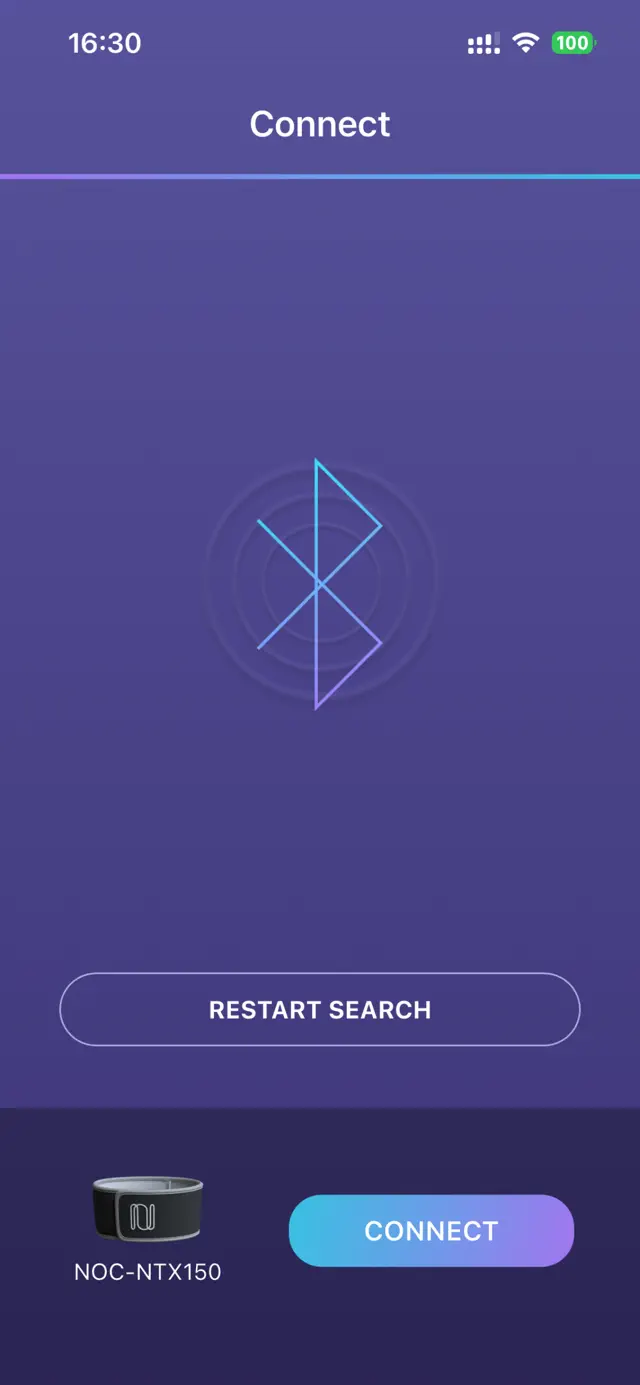
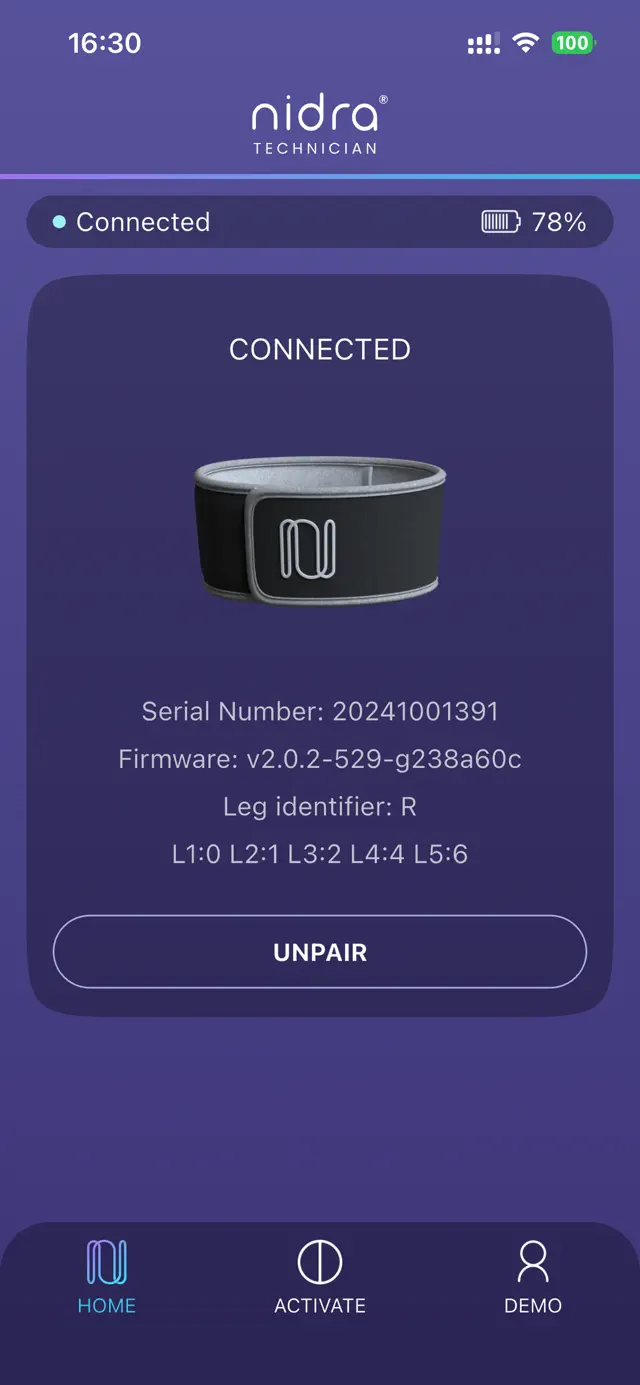
- Pairing with the therapy bands over Bluetooth Low Energy, with device identity shown plainly through details such as serial number, firmware and which leg is being configured.
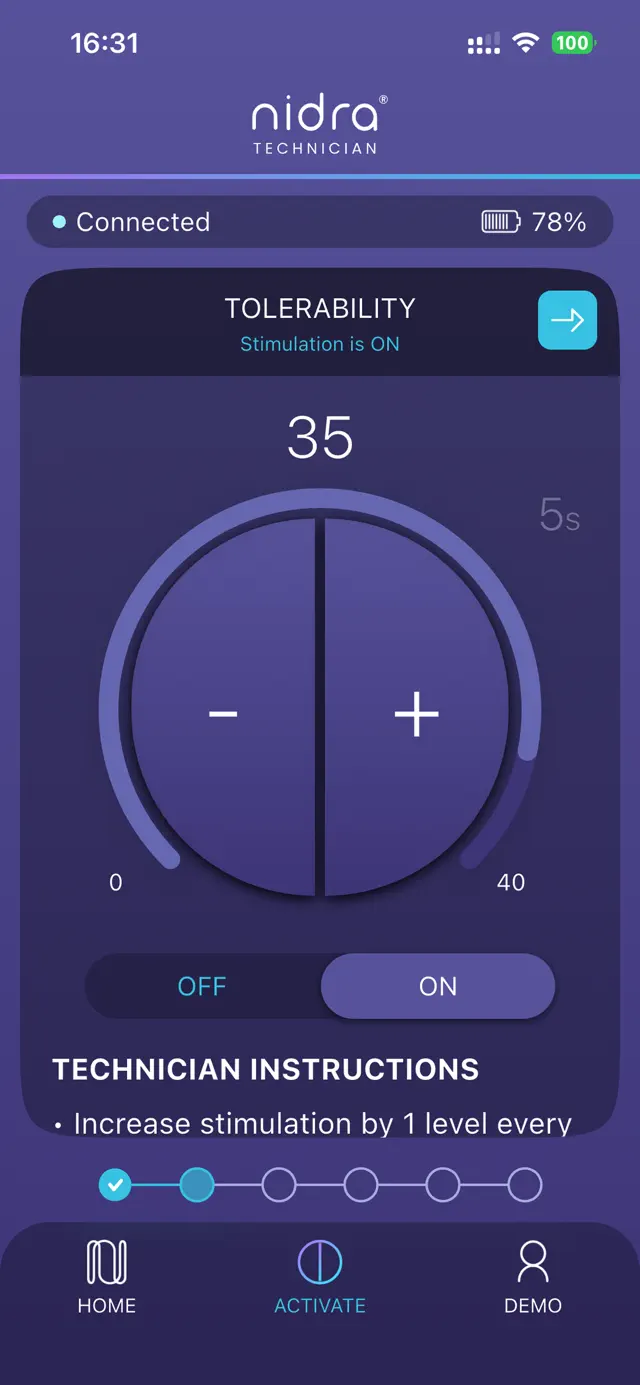
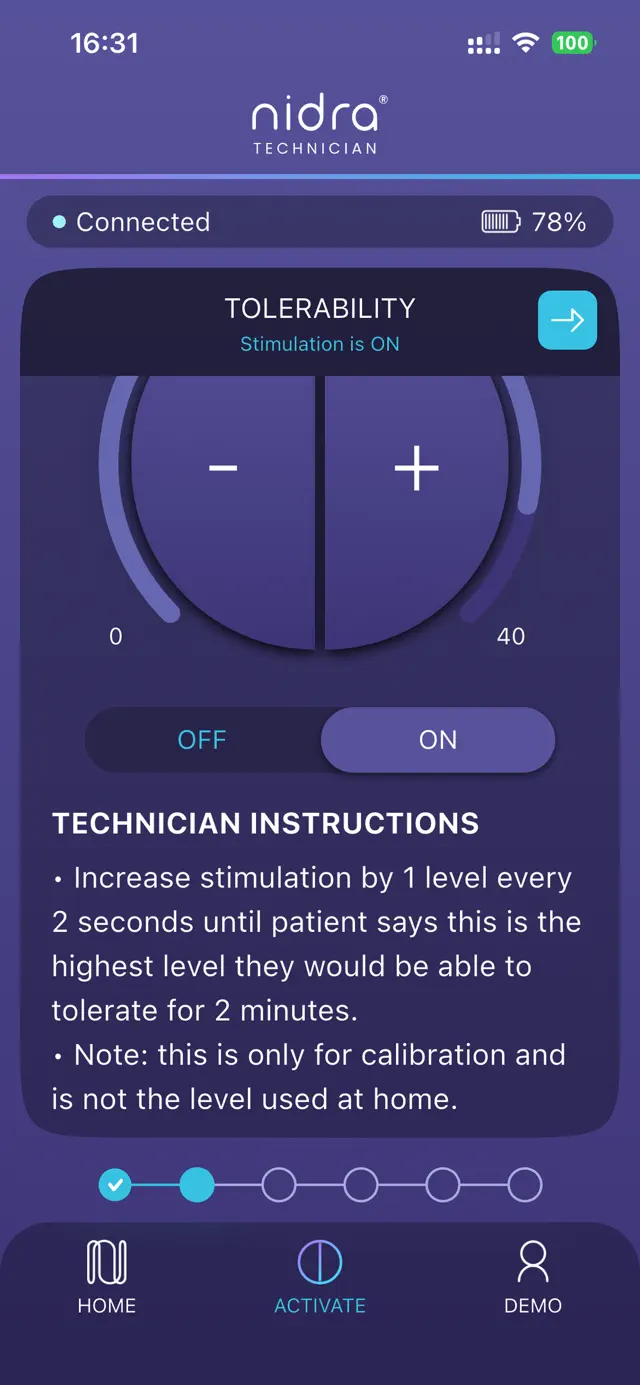
- Titration — stepping stimulation settings through a guided process while the specialist works with the patient's reported tolerability and the app keeps the current state visible.
- Programming the band once the settings have been found, so the activation flow turns the chosen values into a device configuration.
- Verification through built-in checks and indicators that confirm the activation and programming completed instead of leaving success as an assumption.
The hard part
Three constraints stack up here, and each one alone would already make an app harder than average. The connection is wireless, the user is following a defined activation workflow, and the output is a setting on therapy hardware. That combination changes what a good screen means: speed and visual polish matter, but the more important question is whether the specialist can tell what the device is doing at every step.
It writes to a medical device. A consumer app that mishandles state shows the wrong number. This one helps program a therapy band attached to a person. The interface therefore has to distinguish an instruction being sent from a setting being confirmed. Bluetooth is a transport with connection loss, timeouts and partial work, so the user needs a device identity, a clear current state and a deliberate confirmation before moving on. The App Store version history specifically calls out an additional confirmation step for programmed levels, which is the right kind of detail to make visible.
The workflow is clinical, not exploratory. The specialist is following a protocol with a patient in the room. That rules out ambiguous partial states and screens where it is unclear whether a step already happened. The interface has to carry the instructions in order, keep the selected band and leg obvious, show the current titration value and make the next action legible without asking the specialist to interpret a debug state.
It is a Medical-category product. That makes data discipline a design input. The public listing says the developer does not collect data. That is a narrow, supported privacy statement rather than a broader security guarantee. The delivery also has to respect the boundary between the app's activation guidance and medical decision-making: it supports a certified specialist's workflow and does not turn the product story into a claim about treatment outcomes.
What that demands
- Bluetooth handled as an unreliable transport by default — reconnects, timeouts and half-completed writes are normal states to design for.
- Explicit device or workflow confirmation before the UI claims that programming succeeded.
- A guided, linear flow where the current step, selected band and device state are visible together.
- Data discipline — collect nothing the activation workflow does not need, and keep the privacy statement as precise as the implementation.
- Failure states written for a specialist standing in front of a patient, with a recoverable next action instead of a developer-facing stack trace.
The delivery scope is iPhone engineering around the activation loop: BLE integration, device identity, guided titration, programming, confirmation and the failure states between them. If your product touches hardware and a regulated workflow at once, that combination — rather than the feature count alone — should drive the estimate. Native app development is the page for this kind of work.
Questions to answer before you estimate a connected-device app
- What counts as a confirmed action? Separate a tap, a Bluetooth write and a device-confirmed setting. Define the evidence the app must show before it presents a programming step as complete.
- How will a specialist recover from an interrupted session? Document the expected behavior after a disconnect, timeout, app backgrounding or an incomplete write. Keep device identity and the last confirmed state visible so the next action is deliberate.
- Who owns the protocol and acceptance criteria? The device team and qualified clinical or regulatory owners must provide the allowed settings, workflow rules and review evidence. The app team can implement and test those requirements; it should not invent them.
- What data moves, and what is disclosed? Map what the app reads, sends and stores, then compare the implemented behavior with the privacy policy and each store's privacy declarations. A store label is a disclosure, not an independent security audit.
For a project like this, a useful estimate starts with the device protocol, supported iPhone versions, recovery states and review responsibilities. It should state which requirements come from the device owner and what evidence will be available for acceptance before engineering begins.
Scope and project role
Clutch Developer's client contribution is iPhone engineering for Noctrix Health: BLE pairing, device-state presentation, guided titration, programming confirmation and recoverable failure states. Noctrix Health and its qualified device and clinical reviewers own the device requirements, activation protocol, safety decisions and acceptance criteria. Clutch Developer does not claim medical certification; this implementation account is not evidence of clinical benefit or device validation.
Evidence and limitations
The retained screens show band discovery, device details, the tolerability control and stimulation settings; the linked App Store listing shows the published app identity. These materials document the visible interface and store disclosures only. They are not clinical evidence, device-safety validation or medical certification for Clutch Developer; protocol, device acceptance and safety decisions belong to Noctrix Health and qualified reviewers.