Routina is a leave-home checklist for ADHD brains. Its focus is the small, high-friction moment before the door: lock, gas, keys, lights, phone, then the thought that asks whether any of it really happened. A calendar of reminders is too broad for that job because it treats the checks as ordinary tasks instead of one short ritual. Routina gives the user a routine to build, a gentle nudge to open it and a record that can settle the question later. The product is valuable when it reduces that loop to a few visible decisions: remember what matters once during setup, then follow the same sequence when leaving instead of reconstructing it from memory.
The moment before the door
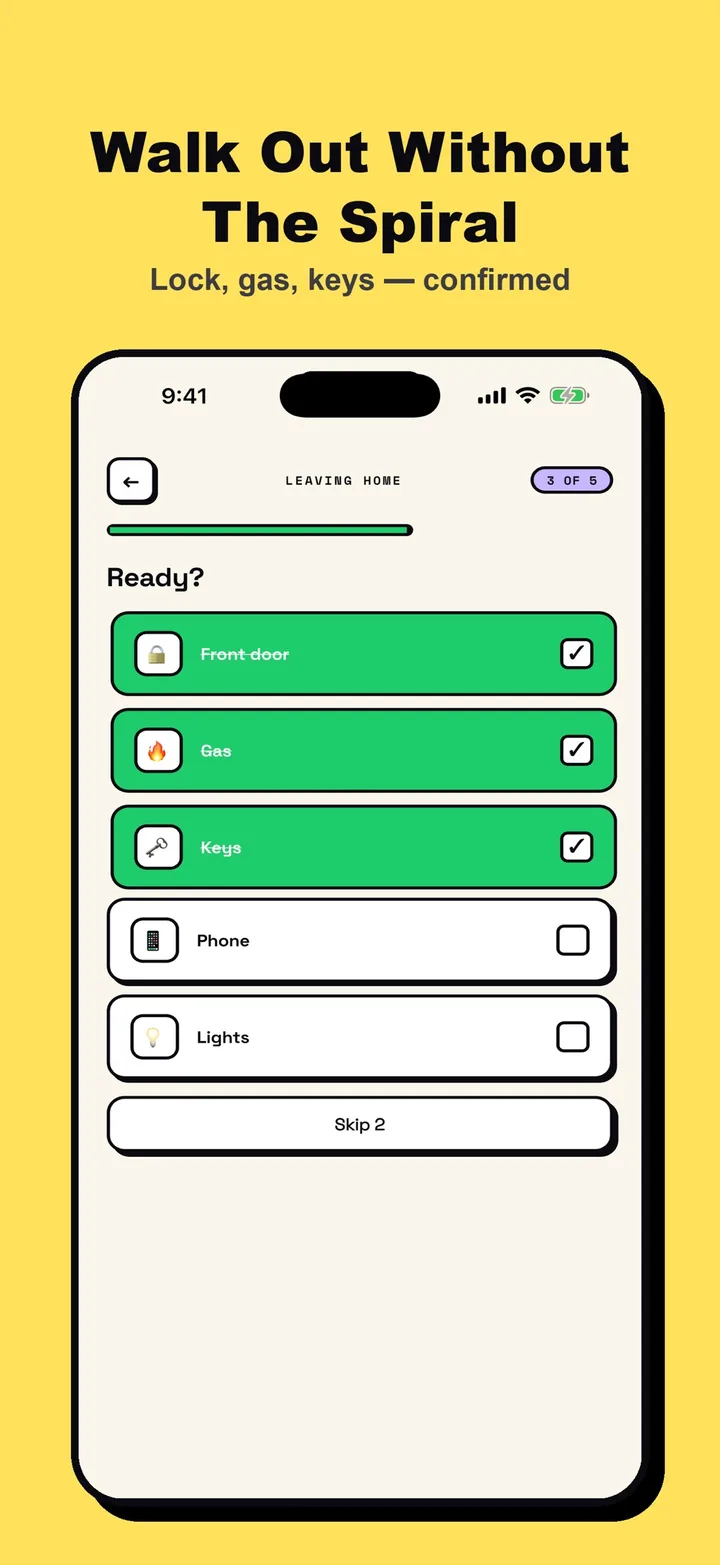
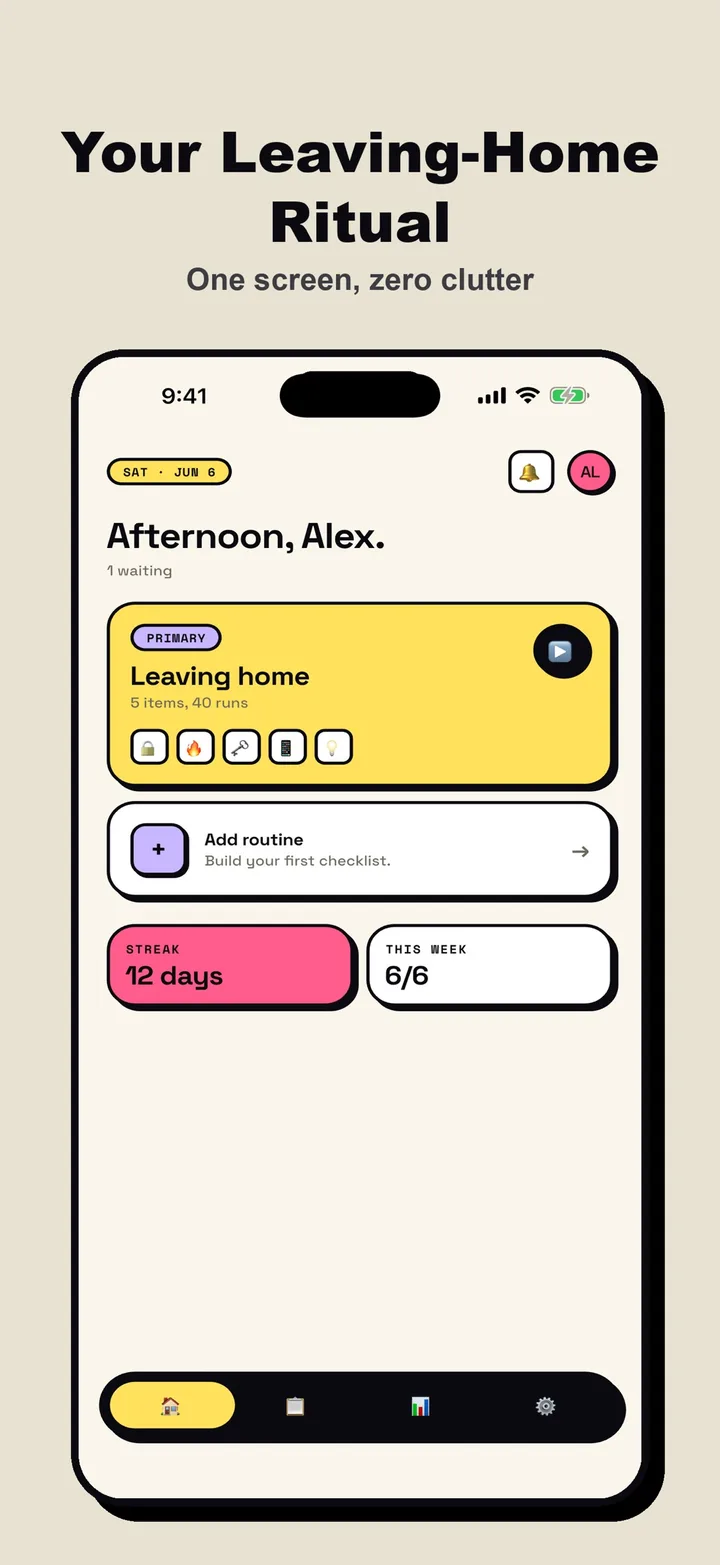
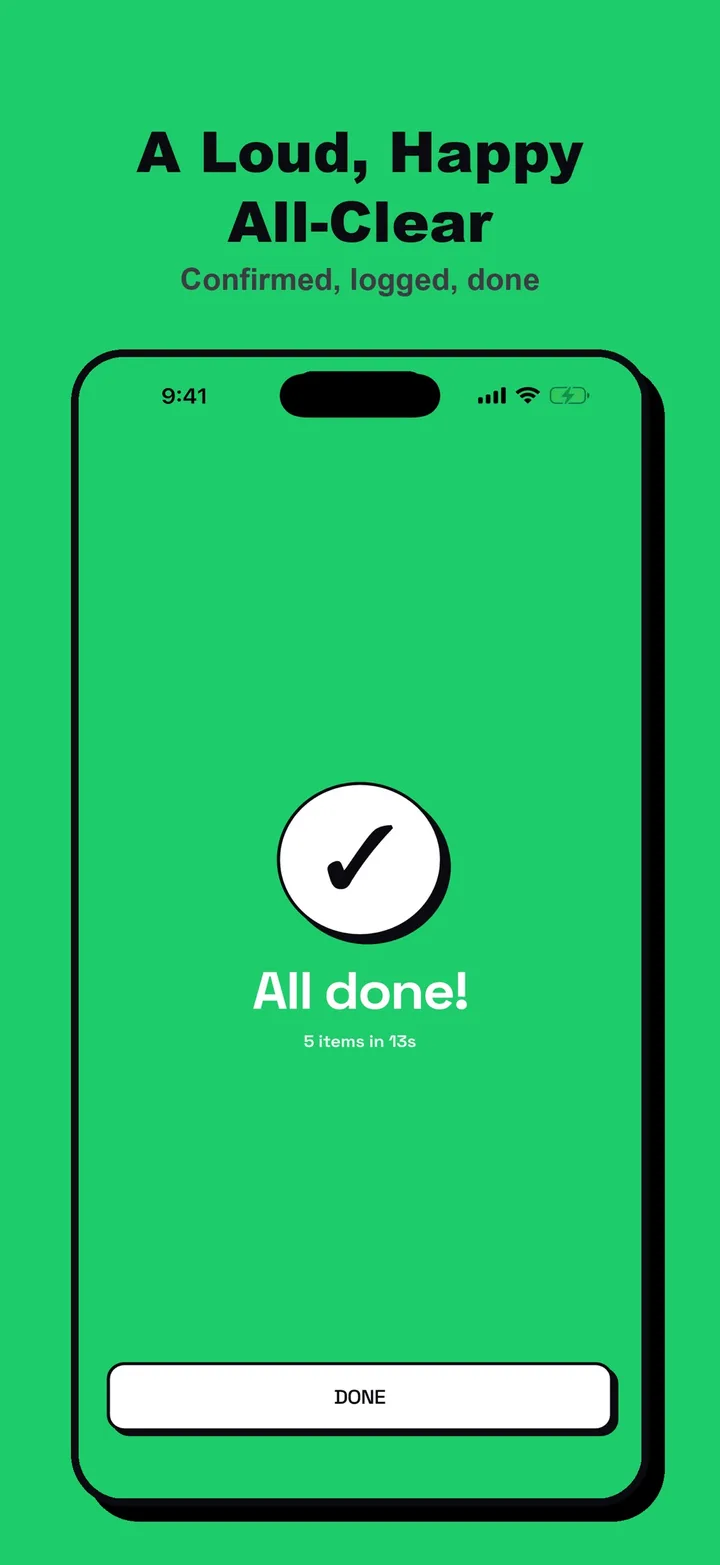
The user starts by choosing the checks that matter and arranging them into a short pre-leaving routine. Building that routine moves the planning work away from the rushed moment: the person decides once what belongs in the sequence, then reuses it on later days. At the time they choose, a daily nudge prompts the person to tap the notification and open that routine; they tap each item as it is done and receive haptic and sound confirmation before moving on. That sequence keeps the flow focused on the thirty seconds before leaving instead of turning it into a general task manager. The same design can support a morning check or an optional bedtime sweep, but the interaction stays direct: one screen, large decisions and no typing when the user is already heading out. Once the routine is complete, the timestamped log gives the user something concrete to return to when the familiar doubt appears.
A log that settles the question
The product is local-first by design. Routines, checks and reminders are intended to work without a connection, with the default experience keeping data on the device. Media proof needs the same qualification: photos remain on the phone in the local flow, while optional cloud backup and sync can move selected data beyond the device when the user enables it. The first routine is free; Pro adds unlimited routines, cloud sync and optional voice or photo proof. That gives the delivery a clear boundary: make the daily check useful on its own, then add broader routine coverage and extra forms of confirmation for people who need them. The local-first choice also keeps the core promise available in the place where the user is checking a lock or turning off the gas: the routine should remain useful even when connectivity is not part of the moment. Optional proof is an extension of that check, so the user can choose a voice or photo record when it helps without changing the simple local sequence.
The build
- A short pre-leaving routine for checks such as locks, gas, keys, lights and a phone.
- Daily nudges that bring the routine back at the time the user chooses.
- One-tap verification with haptic and sound confirmation.
- Timestamped logs that make a completed check easy to revisit when doubt returns.
- iOS and Android apps, with a free first routine and Pro options for more routines, sync and proof.
What we built
Routina is deliberately narrow: it helps someone leave home with a clear sequence and a record they can consult later. The delivery scope follows that moment across iOS and Android: routine setup, scheduled nudges, one-tap checks, haptic and sound feedback, local-first behavior, timestamped history and a paid boundary for extra routines, sync and proof. The value comes from keeping those parts together without turning the product into a broad task manager. Repetition is the point: the user should recognise the routine quickly, complete it with minimal friction and trust the record when memory becomes uncertain. It also means keeping the boundary between local proof and optional sync clear enough that a user knows where a photo or voice check is available. Try Routina, see the Routina product page, or read about our native app development and websites work.