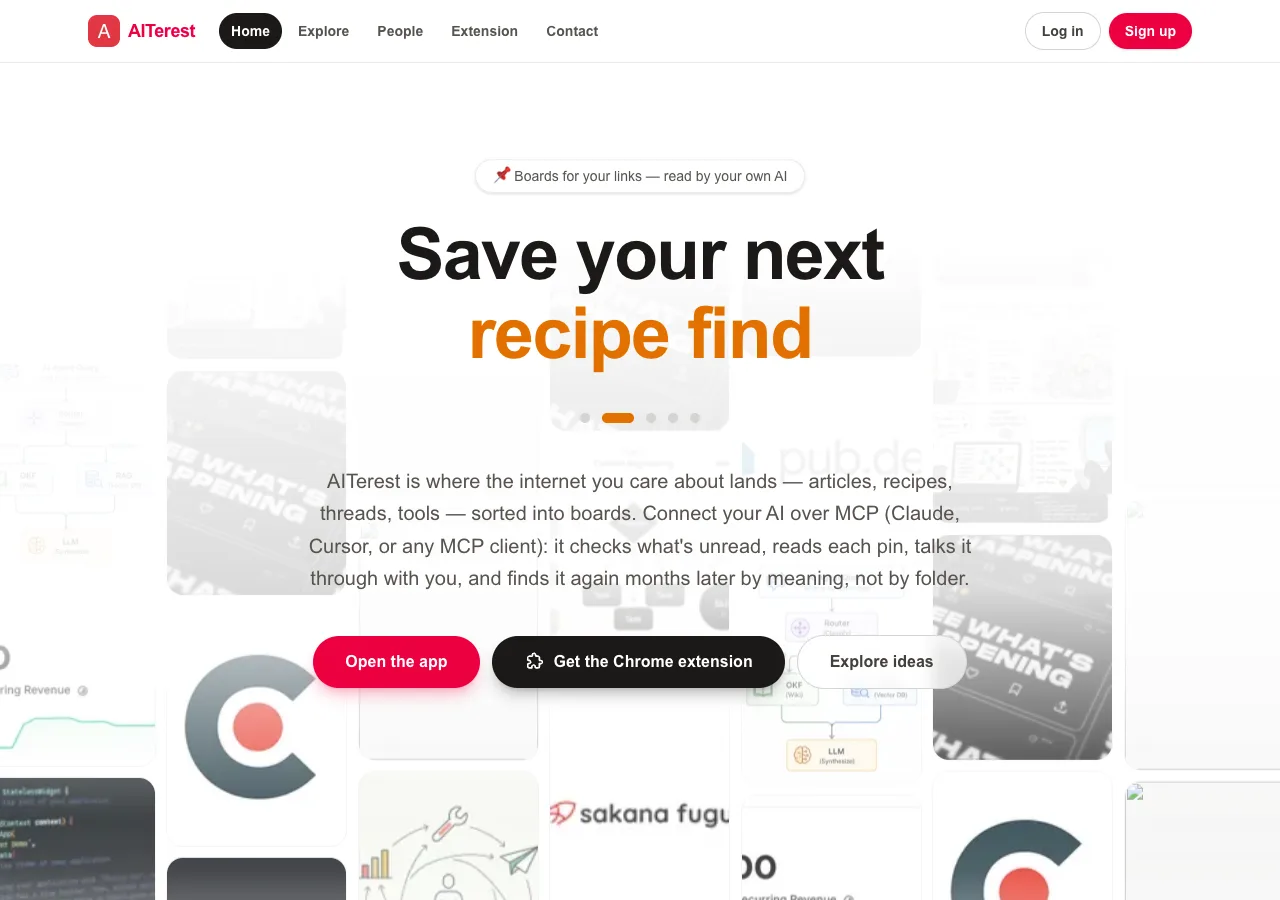
AITerest is a Pinterest-style home for links you actually mean to read: articles, recipes, threads, tools and other pieces of the internet that deserve more than an open tab. Save a URL onto a board with a note and tags, keep the reason it mattered, and see an AI summary when the pin is created. Then connect your own AI agent over MCP so it can check what is still unread, open the saved page text and talk it through with you. It is a Clutch Developer web app.
The need: saving is not reading
A save button solves capture, but it can also create a graveyard of good intentions. AITerest was shaped around the part that usually comes later: returning to the material with enough context to do something with it. Boards give links a home, notes preserve why a link mattered, and tags make the collection useful beyond the moment it was saved. The read or unread state adds a small but important piece of continuity: it lets the next visit start with the links that still need attention instead of treating every pin as equally new. The board is therefore a working queue and a memory of decisions, rather than a storage bin that grows until nobody wants to open it.
From URL to conversation
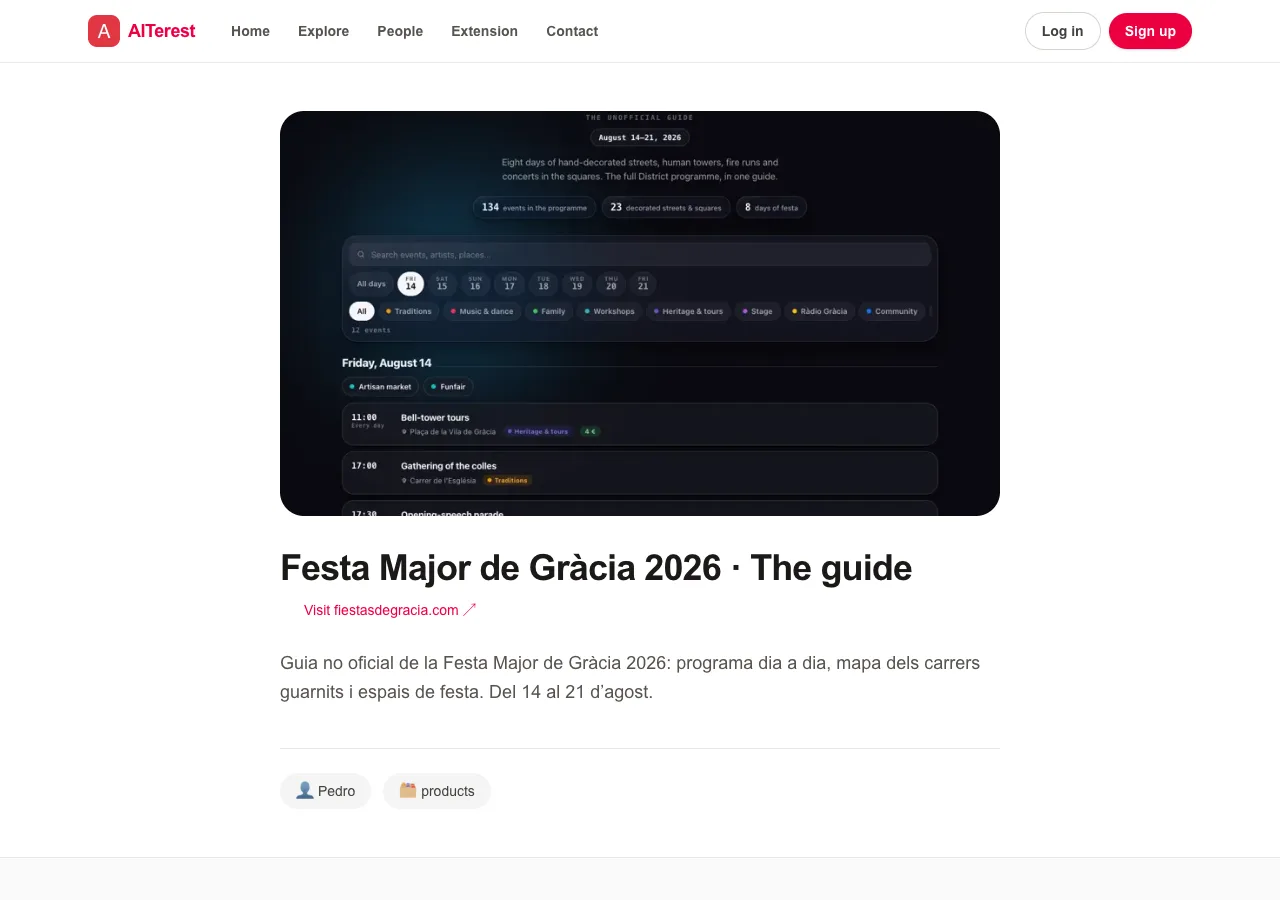
- Save with context by placing a URL on a board with a note and tags, so a future reader can recover the reason it was worth keeping.
- See an AI summary when you save, giving the new pin an immediate point of entry before it disappears into a long list of links.
- Connect your own agent over MCP so it can list unread pins, open the page text, mark pins read, manage boards and discuss the material in its own session.
- Keep public discovery crawlable with ordinary HTML pages for public pins, boards and profiles, while private boards stay behind the product's privacy boundary.
The agent is the product's answer to the read-it-later problem, but it is intentionally the user's agent. AITerest does not present a black-box model as the owner of the conversation. The service keeps the saved material, board structure and read status organized; the connected agent supplies the reading relationship. That division also makes the constraint visible: the agent needs an MCP client and an access token generated from the user's profile, and its reading actions happen in the agent's session rather than as a hidden summary service. It also leaves the user in control of which agent is connected and when a pin is marked as read, which is a better fit for a collection that may mix research, personal plans and links worth revisiting months later.
A web surface that stays understandable
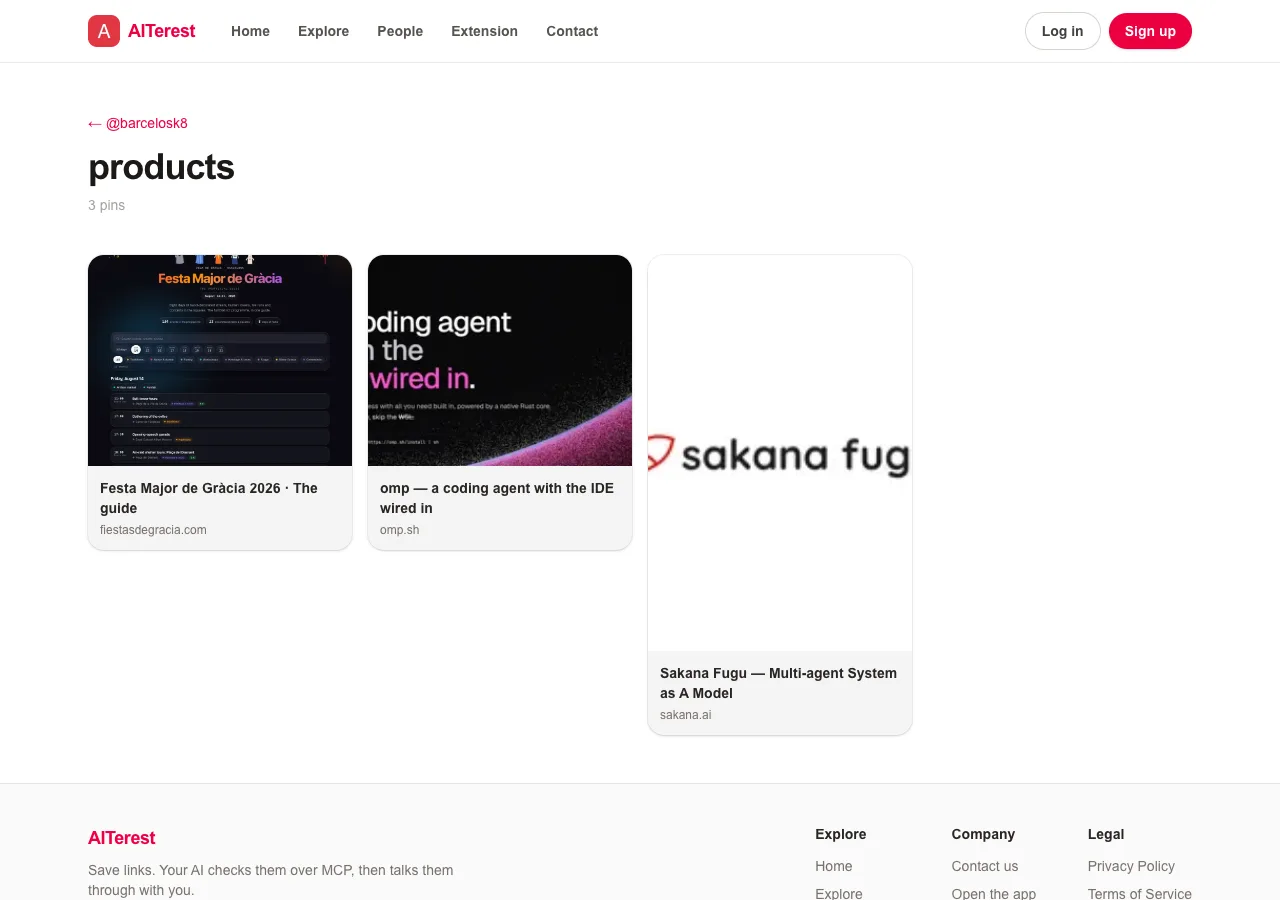
The public side of the product is plain and legible: a visitor can browse public boards and profiles without first creating an account, open a public pin, and follow a collection through ordinary HTML pages. That makes a social, Pinterest-style collection useful for discovery and sharing. At the same time, the product keeps public and private boards distinct. Search visibility is a feature of the public surface; it is not a reason to make every saved link public. A public page can explain the context a person chose to share, while a private board remains a personal working space for the links that are still being sorted.
What we built
We built a web product around an active loop: capture a link, add the reason it matters, organize it on a board, see what is unread, then let an agent return to it over MCP. The delivery scope covers the pin and board model, tags, public discovery, private boards, save-time summaries and the agent connection that can read and manage the collection. It is a deliberately connected workflow: the web app makes the collection legible, the public pages make selected ideas discoverable, and the MCP surface gives the user's chosen agent a defined way to act on unread material. Explore AITerest, visit the AITerest product page, or see our work in AI product development and automation and integrations.